
The short answer
Group trips for singles are organized tours where booking alone is the norm — on the leading solo-focused operators, about 90% of guests arrive solo — and the itinerary does the socializing: shared transport, shared tables, shared summit photos. Book inside your age band, insist on roommate matching to kill the single supplement, and ask the operator one question above all: “what percentage of guests book alone?” Or skip the operator entirely and assemble your own crew on Trespot — the DIY section below shows how.
How singles group trips work
The mechanics are simple: you book a spot on a fixed itinerary — a week in Portugal, ten days in Japan — and arrive at the welcome dinner with 8–20 strangers who made the same choice. A trip leader runs logistics; the schedule alternates group anchors (tours, hikes, dinners) with free blocks; and by the airport goodbye, the group chat has a name and a reunion plan.
Two structural details matter more than the brochure suggests. First, roommate matching: operators pair same-gender solo travelers to waive the 25–50% single supplement — take it; the assigned roommate is where half of trip friendships start. Second, the singles label means unattached, not speed-dating: most guests come for company and the trip, with romance as an unprogrammed maybe. Dedicated dating-forward departures exist; they say so explicitly. (For that side of things, see our travel dating guide.)
The age-band map of operators
The singles-travel market organized itself by life stage, and booking inside your band matters more than the destination:
| Band | Operators | The vibe |
|---|---|---|
| 18–35 | Contiki and hostel-tour brands | High energy, nightlife-forward, budget beds, big groups |
| 25–39 | FTLO Travel and long-weekend specialists | Young-professional pace: boutique stays, food-led, PTO-sized trips |
| 30s–40s | Flash Pack, Other Way Round | Premium small-group adventure; ~90% book solo; comfort + challenge |
| 40+ / 45–59 | Flash Pack’s older collection, Solos, over-40 specialists | Culture, food, and shared tables over club nights — full detail in singles trips over 40 |
| Broad / any age | Intrepid, G Adventures, EF Go Ahead solo departures | Mixed ages, solo-friendly mechanics, roommate matching standard |
The band sets everything downstream: wake-up times, budget register, drinking culture, and whether “free evening” means a rooftop bar or a second dinner. A great trip in the wrong band is a mediocre trip.
What it’s really like: the day-three report

Honest preview, because the brochures won’t give you one. Day one is name-soup and polite over-sharing at the welcome dinner — planned for, it’s painless. By day three the group has self-organized: the early-breakfast crew, the photographers, the pair who always find the good coffee, the one who knows everyone’s story already. Roles form, inside jokes compound, and the group chat gets a stupid name — the reliable sign that strangers became a crew (the full arc is in traveling with strangers).
Expect one person who grates — in any twelve, guaranteed — and plan to need compatible, not unanimous. Expect at least one friendship that outlives the trip; on singles departures, the alumni chat planning next year’s reunion is practically a product feature. And if romance happens, it happens off-program, exactly like everywhere else in life — the trip just supplies better backdrops.
The 5 questions that pick the right trip
- “What percentage of guests book alone?” The single most predictive number. 80%+ means a true singles trip; under half means you’re joining couples’ date nights.
- “What’s the real age spread on my departure?” Not the brand’s target — the actual booked range on your dates. Operators will tell you if you ask.
- “How does roommate matching work — and what if my roommate cancels?” You want the supplement waived either way, in writing.
- “What’s the group size and free-time ratio?” 8–16 with daily free blocks beats 30 with a whistle. Free time is where the friendships actually form.
- “What’s the activity level, honestly?” Graded itineraries exist for a reason; believe the grade, not the photos, and match it to your knees.
The DIY alternative: assemble your own singles trip
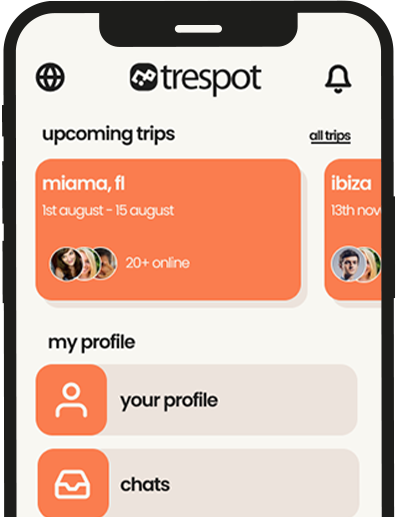
Organized trips charge for three things: the leader, the logistics, and the pre-assembled people. If you’re happy to handle the first two, Trespot supplies the third for free:
- Post the trip — destination, dates, daily budget, vibe — and let the city chat and matching surface two or three compatible travelers. (The vetting ritual does the safety work an operator would.)
- Draft the itinerary with the AI trip planner and share the PDF — reacting to a concrete plan is how strangers become a committed crew.
- Run the group-trip playbook: budget band said out loud, deposit-style commitment (everyone books the same refundable stay), money app from day one — the full system is in how to plan a group trip.
Cost: roughly a third of the organized version for the same country. Trade-off: nobody carries the clipboard but you. Plenty of travelers do one organized singles trip, harvest the confidence and the friends, and DIY every trip after — both are wins.
Quick takeaways
- Singles group trips = everyone books alone, the itinerary does the introductions; ~90% solo on the best operators.
- Book inside your age band — it sets pace, budget, and evening energy more than the destination does.
- Roommate matching kills the 25–50% single supplement and seeds half the trip’s friendships.
- The one question that predicts everything: “what percentage of guests book alone?”
- The DIY version — Trespot crew + AI-drafted itinerary + the group-trip playbook — costs a third as much and keeps the freedom.
Question & Answer
FAQs - Group Trips for Singles
1. How do group trips for singles work?
You book a spot on a planned itinerary and arrive solo along with 8–20 others who did the same; a trip leader handles logistics while shared vans, tables, and activities do the introductions. On the best solo-focused operators, around 90% of guests book alone, and roommate matching pairs same-gender travelers so nobody pays the single supplement.
2. Are group trips for singles about dating?
Mostly no — they’re about traveling with company. Most guests come for friends and shared experiences; trip romances happen but aren’t the program. If dating is your goal, look at singles-specific departures and say so; if it isn’t, a standard solo-traveler trip will feel exactly right.
3. What age groups do singles trips cater to?
The market runs in clean bands: 18–35 party-forward tours, 25–39 young-professional trips, 30s–40s adventure collections (where roughly 90% book solo), and dedicated over-40, 45–59, and over-60 departures. Booking inside your band matters more than the destination — it sets the pace, budget, and evening energy.
4. How much do singles group trips cost?
Expect mid-hundreds for a long weekend to a few thousand for one to two weeks, typically including accommodation, ground transport, a leader, and some meals — flights usually excluded. Roommate matching avoids the 25–50% single supplement; private-room upgrades add it back by choice.
5. What are the best companies for singles group trips?
Match the operator to your age band and style: Contiki (18–35, high energy), FTLO Travel (25–39, long weekends), Flash Pack (30s–40s, premium adventure), EF Go Ahead and Intrepid (broad ages, solo-friendly with roommate matching), and Solos or over-40 specialists for older bands. Always ask what percentage of guests book alone.
6. Is there a cheaper alternative to organized singles trips?
Yes — assemble your own. Post your trip on Trespot, gather two or three vetted travelers with matched budgets and pace, and run the itinerary yourselves with the AI trip planner. You trade the professional leader for freedom and a fraction of the price; the vetting checklist does the safety work.
Your crew is one post away
Whether you book the tour or build the trip, Trespot fills the seats: verified travelers matched by dates and vibe, city chats at every destination, and an AI planner that turns a match into an itinerary. Post your trip and meet the singles already going.
References
- Flash Pack — solo-booking share and 30s–40s / 45–59 collections.
- FTLO Travel, Contiki, Solos Holidays — age-band positioning.
- Intrepid and EF Go Ahead — roommate matching and solo departures.
- Trafalgar — travel groups for singles over 40.