
Introduction
Want the freedom of solo travel with the ease and camaraderie of a crew? Solo group trips promise that sweet spot: logistics handled, a built-in safety net, and instant travel friends—without sacrificing alone time. Operators from small-group adventure brands to culture-rich city specialists now design departures specifically for soloists, often publishing transparent details on group sizes, single supplements, and free-time windows. This guide goes beyond lists. You’ll get a decision framework to match your travel style, a solo-supplement strategy to protect your budget, a group-dynamics playbook to keep the vibes high, and a responsible travel lens to ensure your money supports local communities. We’ll also show how to use Trespot city chats to add low-commitment meetups and verified travel buddies to any itinerary. By the end, you’ll know exactly how to choose, book, and thrive on solo group trips that fit your pace, budget, and personality.
Why Choose a Solo Group Trip?

Safety net & local expertise
Small groups come with trip leaders who manage language barriers, logistics, and cultural norms—so you can say yes to more experiences with less stress. It’s the ideal blend for first-timers and seasoned travelers entering new regions.
Logistics made easy
Airport pickups, museum entries, intercity transfers, and time-boxed highlights turn planning hours into actual memories. You conserve decision energy and spend it on the fun parts—food, photos, and friendships.
Community & confidence
With solo group trips, you’ll meet built-in travel friends from Day 1. Many itineraries include preserved free time so you can explore independently and regroup for dinner, striking the right social balance.
How to Pick the Right Style
Adventure-heavy vs culture-immersive vs hybrid
Love kinetic days? Choose trekking, cycling, or watersports-forward operators. Prefer cafés, galleries, and food tours? Pick culture-rich city itineraries. Hybrid trips are ideal if you want both movement and museums.
Age-banded vs open-age groups
Age-banded communities (e.g., 21–35 or 25–39) gather similar life stages and social energy. Open-age groups excel if your priority is the destination over demographics.
Women-only options
Women-only solo group trips offer moderated spaces, roommate matching, and community-first vibes. They’re excellent for comfort, safety, and fast friendships.
Operator Shortlist & What Sets Them Apart
- Adventure-forward: brands that specialize in walks, treks, and cycling, with clear difficulty ratings and standout routes.
- Hybrid & culture: small groups with local leaders, authentic food experiences, and flexible afternoons.
- Age-banded socials: curated for 21–35 or 25–39 with boutique stays and high-energy mixers.
- Mature & women-only: own-room comfort, moderated communities, and longer brand trust.
| Operator Type | Typical Group Size | Vibe & Inclusions | Best For |
|---|---|---|---|
| Adventure-forward | 12–16 | Hikes/treks, activity gear guidance, clear difficulty ratings | Active travelers, mountain/trek lovers |
| Hybrid & culture | 12–20 | City walks, tastings, cooking classes, flexible afternoons | First-timers, culture & food fans |
| Age-banded (21–35 / 25–39) | 12–18 | Social mixers, boutique stays, nightlife options | Young professionals, digital nomads |
| Women-only / 50+ | 10–18 | Own-room options, safety-forward moderation | Comfort-seekers, community-first travelers |
Compare beyond price: group size, “% on foot” vs bus time, free-time ratio, solo policies (roommate matching, no single supplement windows), and what’s truly included.
The Solo Supplement Playbook
When it appears & why
Single supplements offset the cost of solo occupancy in double-priced rooms. They’re not universal; some departures waive them or offer roommate matching.
How to reduce or avoid it
- Book early: waiver inventory is limited.
- Ask for a roommate match: often removes or slashes the supplement.
- Flex dates & destinations: shoulder seasons can unlock better deals.
- Watch “own room” upgrades: compare the upgrade against total value.
Value vs. cost
Line-item inclusions—local guides, entrance fees, internal transfers, excursions—can make a higher sticker price the real bargain across the week. Always tally what you’d pay à la carte.
Responsible Solo Group Trips (Travel that Gives Back)
Choose itineraries that funnel money into local economies: women-run cooperatives, community-owned homestays, and regenerative projects. You’ll get deeper cultural access, vetted homestays, and safer structures in remote areas—especially valuable on solo group trips. An added bonus: these experiences create your favorite stories.
Budgeting: Daily Caps, Buffers, and Add-Ons
Think in daily envelopes—then add a 10–15% “oops fund” for weather pivots or irresistible activities. Track optional extras in Splitwise to keep the group vibe clean.
| Category | City-Culture Tour (€/day) | Adventure Tour (€/day) | Notes |
|---|---|---|---|
| Included items | 90 | 110 | Guides, entrances, some transport |
| Meals not included | 25 | 20 | Culture trips skip lunches more often |
| Optional add-ons | 20 | 35 | Tastings vs extra hikes/gear |
| Tips & incidentals | 10 | 10 | Per local norms |
| Estimated total | 145 | 175 | Watch seasonality & FX rates |
Illustrative ranges. Always price against your operator’s current inclusions and your travel dates.
Group Dynamics & Personal Space
Use the 60/40 model: 60% shared anchors (arrivals, 2 marquee experiences), 40% free time. That balance protects independence, reduces decision fatigue, and gives space for serendipity.
Scripts that save friendships
- “That price is outside my cap—mind if I opt out and meet you at 7?”
- “My pace is slower; I’ll take the easy trail and catch you after.”
- “I need quiet time this afternoon—see you for sunset.”
Unique insight: Nominate a daily “float” hour when anyone can change plans guilt-free.
Finding Your People Beyond the Tour (Trespot)
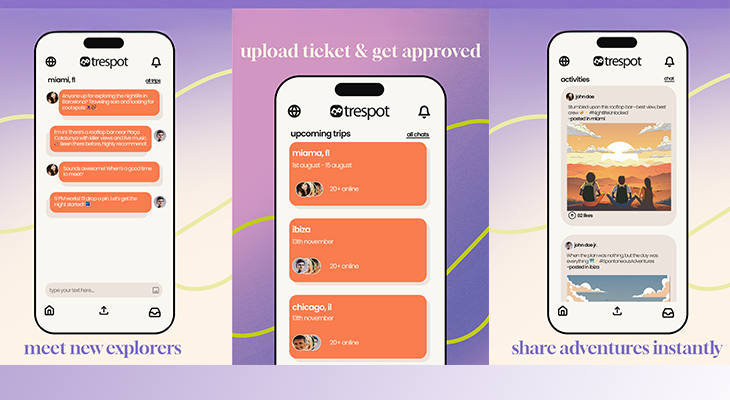
Even the best tour leaves free hours. Use Trespot to join city-specific group chats for your dates: post a Day-1 dinner, verify closures, and line up a sunrise walk with travelers who match your pace. It’s the easiest way to expand from one tour group to a micro-network in every city—travel solo, not alone.
Safety & Risk Management
Why groups help
Professional leaders bring local know-how, scam awareness, and emergency coordination. That’s hard to replicate when you’re alone in an unfamiliar place.
Your redundancy kit
- Offline maps + eSIM with data
- Essential meds + ID/insurance copies
- Shared note with hotel, leader, and embassy contacts
Example Itineraries (3–10 Days)
A) Culture-first: Italy & Spain (7–8 days)
Rome → Florence → Barcelona. Anchors: small-group entries, cooking class, Gothic Quarter walk. Free-time windows for cafés and neighborhoods. Great for culture-hybrid operators and first-timers.
B) Adventure sampler: Switzerland & Northern Italy (6 days)
Interlaken via ferrata → lake paddle → Bernese Oberland hike → Dolomites day trek. Reserve huts early; expect gear rentals. Ideal for adventure-forward brands.
C) Impact-forward: Nepal Community Trek (8–9 days)
Kathmandu → community trek with women-led homestays → cultural workshop → heritage walk. Safer in groups; choose operators integrating community networks.
Packing for a Solo Group Trip
- Social kit: earplugs, compact card game, universal power strip (non-surge for flights).
- Day-bag checklist: ID/insurance, water, rain layer, sun protection, small first-aid, offline map, cash for tips.
- Women-only groups: confirm room setup, quiet hours, and roommate preferences ahead of time.
Book Like a Pro
- Refundable flight & early hotel night: avoids “missed connection” stress.
- Alignment call / pre-trip chat: share pace, food preferences, accessibility needs.
- Payment cadence: deposit → second tranche after flights → final after reviewing the trip pack.
Quick Takeaways
- Small groups, big ease: leaders + logistics free your time and energy.
- Match your style: adventure vs culture, age-banded vs open-age, women-only if preferred.
- Beat single supplements: book early, roommate match, compare true inclusions.
- Travel that gives back: pick community-integrated itineraries and homestays.
- Keep freedom: use a 60/40 plan and Trespot city chats to add micro-meets.
Conclusion
Solo group trips are independence with a backbone. Choose a style that fits (adventure, culture, or hybrid), compare operators on group size, free-time ratio, and inclusions, and protect your budget with a smart solo-supplement strategy. When possible, favor responsible itineraries that employ local leaders and community-owned stays—your spend will create impact, and your experiences will go deeper.
To supercharge the social layer, use Trespot to join city chats along your route. Post a Day-1 dinner, find a sunrise buddy, and grow a trusted micro-network without over-committing. Pick one departure today, sketch a 60/40 plan, and drop your first hello in Trespot. Travel solo, join a great group, and meet the people who make the journey unforgettable.
Question & Answer
FAQs — Solo Group Trips
1) Are solo group trips safe for first-timers?
Yes. Leaders handle logistics and local norms, and the group adds a safety net—ideal if you’re new to international travel.
2) How big are groups on solo-friendly tours?
Many small-group operators average ~14–20 travelers—big enough for variety, small enough to feel personal. Always check your specific trip page.
3) How do I avoid paying a single supplement?
Book early, request roommate matching, flex your dates, and compare inclusions. Shoulder seasons can unlock waived or reduced supplements.
4) Can I keep my independence on a group tour?
Absolutely. Choose itineraries with clear free-time windows and run a 60/40 plan—anchors together, solo slots daily, regroup for dinner.
5) How do I meet people beyond my tour group?
Use Trespot city chats during free time for micro-meets, tips, and sunrise/dinner plans—then rejoin your group for the next anchor.
References
- EF Go Ahead Tours — Solo Travel Groups
- Intrepid Travel — Solo Tours & Vacations
- TourScoop — Best tour companies for solo travelers (2026)
- Exodus Travels — Solo Traveller Holidays
- Explore Worldwide — Holidays for Solo Travellers
- FTLO Travel — Group Trips (25–39)
- Under30Experiences — Group Travel for 21–35
- Solos Holidays — Small Group Guided Tours (50+)
- Sisterhood Travels — Women-only travel groups
- The Guardian — Community tourism & homestay features
We synthesized widely cited operator pages, roundups, and responsible-travel features to build a practical 2026 playbook for solo group trips.