
The short answer
There are three reliable ways to find someone to travel with: recruit smarter from people you already know (pitch one specific, small trip with a booking deadline — not a vague dream); match with a like-minded stranger on a verified platform like Trespot; or book the trip solo and add social structure — hostels, city chats, group day tours — so company finds you on the road.
Most people only ever try a half-hearted version of the first one, get a chorus of “maybe!!”, and quietly shelve the trip. The fix isn’t better friends. It’s a better process — and it takes about 30 days.
Why this happens to almost everyone
Having no one to travel with isn’t a social failure; it’s scheduling arithmetic. For two employed adults to take the same trip, you need overlapping vacation days, compatible budgets, matching enthusiasm for the same destination, and partners/kids/leases that all cooperate in the same two weeks. Each factor filters out most of your circle; multiplied together, they filter out nearly all of it. That’s not you — that’s math.
The travel industry has quietly reorganized around this fact. Solo travel searches hit record highs in 2026 (about 1.6 million worldwide in January alone, per Explore Worldwide’s trends report), group tour companies report that the overwhelming majority of their guests book alone — around 90% on platforms like Flash Pack — and travel matching apps exist as an entire category. Translation: an enormous number of people are in your exact situation, actively looking for each other. The rest of this guide is about making yourselves findable.
Path 1: Recruit smarter from people you already know

Before you write off your circle, notice how you’ve been asking. “We should totally do Europe sometime” is not an invitation — it’s a vibe. Nobody can say yes to a vibe. Recruit like this instead:
- Pitch one specific trip. “Lisbon, October 9–13, flights are about $480 right now, I’ve found a two-bedroom place for $70 a night split.” Specificity converts because the friend is deciding on a real thing, not committing to your entire dream.
- Shrink the ask. A long weekend converts five times easier than two weeks. Get one great weekend done and the two-week trip sells itself later.
- Do the planning yourself. Most “maybe” friends aren’t unwilling — they’re unwilling to plan. “You literally just have to book one flight” removes the real obstacle. (Our AI trip planner makes this a ten-minute job.)
- Set a public deadline. “I’m booking on the 15th either way.” Deadlines convert maybes into decisions — and even when the answer is no, you’ve freed yourself to move to Path 2 instead of waiting another season.
- Skip the group chat trap. Group chats produce enthusiasm and zero bookings; everyone waits for someone else to commit first. Recruit one person directly, then let others join a trip that already exists.
Path 2: Find a new travel companion
If your circle can’t come, borrow from the millions of travelers with the same problem. The dedicated tools match you by what actually matters — destination and dates:
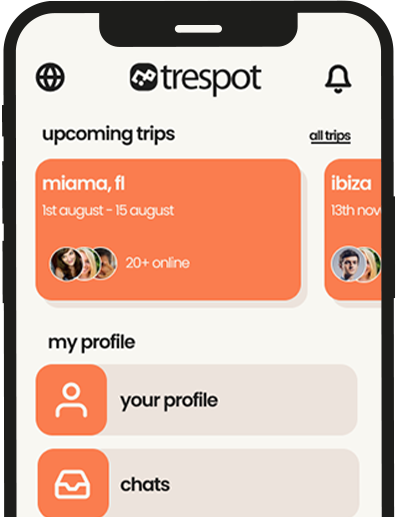
- Travel buddy apps. On Trespot, post your trip, join the destination’s city chat (unlocked by verified trip details, so everyone there is real), and message travelers who’ll overlap with you. Declare your vibe — buddy, friends, open — so expectations match from message one.
- Solo-friendly group tours. Company is built in, logistics are handled, and you’ll likely leave with future travel friends. See travel groups for solo travelers and travel groups for adults.
- Communities and forums. Reddit’s travel-partner threads, destination Facebook groups, work-exchange boards. Free and wide-reaching, but unverified — vet accordingly.
Nervous about the whole idea? Our guide to traveling with strangers covers what it’s actually like, level by level. Whichever channel you use, the process is identical and non-negotiable: video call before committing, exchange exact budgets, do a trial meetup, keep bookings refundable. The complete process — including the 10-point vetting checklist and the exit plan — is in our guide to how to find a travel buddy; the deeper compatibility framework is in how to find a travel partner.
Path 3: Go anyway — solo with a social safety net
Here’s the reframe that changes everything: booking alone doesn’t mean traveling alone. It means you control the itinerary and rent the company by the day:
- Book social accommodation. Hostels with common rooms and event calendars (private rooms exist if dorms aren’t your thing), or guesthouses known for communal breakfasts. Read reviews for the word “met.”
- Front-load one group activity per city. A free walking tour on day one, a cooking class, a day trip. These are friendship vending machines — insert $30, receive dinner companions.
- Open the city chat before you land. Trespot’s city chats mean you arrive with conversations already running — “anyone around for the night market Thursday?” posted from the airport works embarrassingly well.
- Learn the solo baseline. Our guides to solo trip tips, the best places to solo travel, and solo travel safety cover the mechanics of thriving on your own schedule.
Travelers consistently report the same surprise: the solo trip with social scaffolding produces more connection than the group trip with the wrong person. You meet people at your energy level, keep the mornings you want quiet, and nobody sulks about the museum.
The 30-day plan: from “no one to go with” to booked
Run all three paths in parallel — the plan converges on a booked trip regardless of which one pays off:
| Week | Do this | Outcome |
|---|---|---|
| Week 1 | Define the trip: destination, dates, daily budget. Pitch two specific friends with the deadline script. Post the same trip on Trespot and one community. | The trip exists in writing; the clock is running. |
| Week 2 | Chase friend answers (deadline stands). Chat with app matches; move the best two to video calls; compare budgets and pace honestly. | A shortlist: one friend, one or two strangers, or neither — all fine. |
| Week 3 | Trial meetup with the best match — coffee if local, a video itinerary session if not. Draft the shared plan with the AI planner and watch how they engage. | A decision: travel together, or go solo-with-scaffolding. |
| Week 4 | Book it — refundable where possible. Shared trip: agree money rules and the no-fault exit clause. Solo: book the social hostel and one group activity, join the city chat. | A real trip on the calendar. The wish becomes a date. |
The mindset shift that unlocks all of it
Stop treating “someone to go with” as a prerequisite. It’s a preference — a strong one, worth 30 days of honest effort. But the travelers who see the most of the world all internalized the same rule at some point: the trip gets booked first; the company gets solved second.
Run the plan. Give your friends their fair shot at the deadline, give the apps a real profile with a real trip, and if nothing lands — go, with a social hostel booked and the city chat open. The worst realistic outcome is a trip where you occasionally ate dinner alone in a beautiful place. The alternative you’re protecting yourself from — the trip that never happens — is worse, and unlike a quiet dinner, you don’t get those years back. There’s a reason our community’s favorite essay is about the power of making friends while traveling: the company you find out there is half the point of going.
Quick takeaways
- No one to travel with is scheduling math, not a social verdict — and millions of travelers are solving the same equation.
- Recruit friends with one specific trip, a shrunken ask, done-for-them planning, and a public booking deadline.
- Group chats produce enthusiasm, not bookings. Recruit one person directly.
- Verified travel buddy apps match on the things that matter: destination and dates. Vet with a video call and a trial meetup.
- Booking alone ≠ traveling alone: social hostels, one group activity per city, and a live city chat manufacture company on demand.
- Run the 30-day plan on all three paths at once — every branch ends with a booked trip.
Question & Answer
FAQs - Finding Someone to Travel With
1. What do I do if no one wants to travel with me?
You have three good options: recruit smarter from people you know by pitching one specific, small trip instead of a vague big one; match with a like-minded traveler on a verified travel buddy app; or book the trip solo and add social structure — social hostels, city chats, group day tours — so you’re alone in logistics but not in experience.
2. How do I convince a friend to travel with me?
Shrink the ask and add a deadline. Pitch one specific trip with dates and a realistic budget, start with a weekend rather than two weeks, offer to do the planning, and tell them you’re booking on a set date either way. A concrete, time-boxed invitation converts far better than “we should travel sometime.”
3. Is it weird to travel alone?
Not anymore — solo travel is at record highs, with worldwide searches peaking around 1.6 million in January 2026. Restaurants, tours, and hostels are built for it, and apps make it easy to find company for the parts you’d rather share. Going alone no longer means being alone.
4. Is it safe to travel with a stranger I met online?
It can be, with process: use platforms that verify identity or trip details, video call before committing, meet in public first, book separate rooms for the first nights, share your live location with someone at home, and keep your own money and documents. Skipping the process, not meeting strangers, is what creates the risk.
5. How long does it take to find someone to travel with?
Plan on about a month. In week one you define the trip and post it; week two is conversations and video calls; week three is a low-stakes trial meetup and the decision; week four you book. Faster is possible for spontaneous city meetups — slower is fine for long or expensive trips.
6. Should I just wait until a friend can come along?
Set one deadline and then stop waiting. Schedules rarely align by themselves — pick a date, tell your circle you’re booking on it, and if nobody commits, take the trip anyway using a travel buddy app or a solo-friendly group tour. Waiting indefinitely mostly produces older versions of the same wish.
Your trip is one post away
Somewhere on Trespot right now, someone is planning your trip and wondering who to go with. Post your destination and dates, join the city chat, and find out. Worst case, you land with dinner plans. Best case, you land with a travel partner for years.
References
- Explore Worldwide, Solo Travel Trends Report 2026 — solo travel search volumes.
- Flash Pack — share of group-tour guests who book solo.
- Booking.com Future of Travel Survey, 2024 — social motivations of younger travelers.
- Trespot community observations, 2025–2026 — city-chat posting patterns and reply rates.