
The short answer
To find a travel partner, start where people already declare their plans: post a specific trip on a verified platform like Trespot, join a solo-friendly group tour, or recruit from an interest community you already belong to. Then screen for the six compatibility factors below — budget, pace, planning style, social battery, risk appetite, and food style — and confirm the match with a short test trip before you commit to a long one.
The order matters. Most travel partnerships fail not because people couldn’t find each other, but because they skipped straight from “we get along in chat” to “non-refundable two-week booking.” Everything in this guide exists to fill that gap.
Travel buddy vs. travel partner: what’s the difference?
A travel buddy is company for one trip — you match on destination and dates, share some costs and some sunsets, and often part ways at the airport. A travel partner is the upgrade: someone whose travel style fits yours well enough that you plan trip after trip together. Same vetting process, higher bar, longer payoff.
In practice, nearly every travel partner starts as a travel buddy who passed the real-world test. So if you’re starting from zero, read our full guide on how to find a travel buddy for the nine sourcing methods and the 10-point vetting checklist — this page picks up where that one ends, at the question of which match to invest in.
The 4 types of travel partner (know which one you’re looking for)
- The one-trip partner. Matched for a single route — two weeks in Vietnam, a Patagonia trek. Lowest commitment; judged purely on trip fit. Most people should start here.
- The recurring partner. The friend you make one good trip with and then keep: an annual route-planning ritual, a shared bucket list, someone who already knows you’re useless before coffee. The most valuable outcome on this list.
- The group-based partner. You travel as part of a rotating crew — a trekking club, a group of ex-hostel friends, a solo group trip alumni chat. Great for people whose schedules rarely line up one-to-one.
- The romantic-possibility partner. Some travelers are open about wanting a match that could become more. That’s a legitimate category — it just needs honesty upfront and a platform built for it. See our guide to travel dating apps for how that world works.
Knowing your category changes how you search, what you disclose, and how much vetting the match deserves. Ambiguity between categories — one person thinks “buddy,” the other hopes “romance” — sinks more matches than any logistics problem.
Where to find a travel partner in 2026
Full detail on all nine channels lives in the travel buddy guide; here’s the short version ranked by how well each pool suits partnership rather than one-off company:
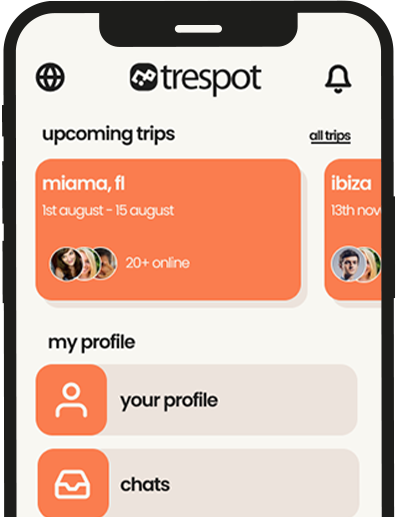
- Travel partner apps. On Trespot, travelers post real trips — verified by tickets and bookings — and match by city and dates. Because profiles are anchored to actual travel behavior, you can see whether someone’s style matches yours before you ever say hello. The built-in AI trip planner then gives you a shared itinerary to react to, which is the fastest compatibility probe there is: watch what they add, cut, and argue for.
- Interest communities. Climbing gyms, dive schools, photography clubs, running crews. You already share the activity that will fill the trip — the highest base rate of long-term compatibility of any channel.
- Solo-friendly group tours. Travel with ten strangers for two weeks and you’ll know exactly who you’d travel with again. About 90% of guests on platforms like Flash Pack arrive solo, so everyone is silently auditioning partners too. See travel groups for solo travelers.
- Digital nomad circles. Coworking spaces and coliving houses select for flexible schedules and long horizons — the right pool for multi-month partnerships.
- Your extended network. Friends-of-friends come pre-vetted. Post a specific itinerary where they can see it and let the right person recognize themselves.
The 6 compatibility factors that decide everything

Personality matters less than people think; operating style matters more. Six dimensions predict nearly all friction. For each one, there’s no right answer — only the question “are we within one notch of each other?”
| Factor | The spectrum | The question to ask |
|---|---|---|
| Budget | Dorm bed ↔ boutique hotel | “What’s your daily number, and what do you happily splurge on?” |
| Pace | Three cities a week ↔ three cafés a day | “Perfect travel day, hour by hour?” |
| Planning style | Spreadsheet ↔ vibes | “How much of the trip should be booked before we land?” |
| Social battery | Meet everyone ↔ recharge alone | “How much solo time do you want on a shared trip?” |
| Risk appetite | Night bus, street food, rent-a-scooter ↔ booked transfers and TripAdvisor top 10 | “What’s the sketchiest thing you’ve done traveling — and would you again?” |
| Food style | Eat anything with a queue of locals ↔ needs a menu in English | “Describe your ideal dinner on night three.” |
Two rules of thumb from watching thousands of matches form on Trespot: budget and pace mismatches end trips; the other four just require honest scheduling (build in solo afternoons, alternate who picks dinner). And one notch of difference is healthy — a slightly more adventurous partner stretches you; three notches is a slow-motion argument.
The 3-day test trip blueprint
Never let the first trip together be the big one. Before a two-week route or anything with non-refundable money, run a deliberately small experiment — a weekend in a nearby city, or the first three days of a longer trip with an agreed decision point. Structure it like this:
- Day 1 — logistics day. Travel there together. Watch how they handle the boring parts: delays, wrong turns, hunger before lunch. Anyone can be charming at dinner; you’re auditioning the 7 a.m. version.
- Day 2 — full shared day. One planned activity each — you pick the morning, they pick the afternoon. You learn how they lead, how they follow, and whether “I don’t mind, you choose” is politeness or a habit that will quietly hand you all the decisions for two weeks.
- Day 3 — split day. Separate mornings on purpose; reunite for dinner. This tests the most underrated skill in shared travel: being apart without it meaning anything. If separating feels like a relief to both of you and dinner is full of stories, that’s not failure — that’s exactly the rhythm long trips run on.
Then hold the debrief: costs settled in the app, one honest exchange — “what should we do differently on a longer trip?” If the answer flows easily in both directions, book the big one. If the debrief feels impossible, that is the answer.
How to keep a great travel partner (the part nobody writes about)
A compatible travel partner is genuinely hard to find — treat a good one like the asset it is:
- Alternate the picks. Destinations, restaurants, splurges. Resentment compounds quietly when one person always drives.
- Debrief after every trip. Ten minutes: what worked, what didn’t, what’s next. The pairs that last treat it like a standing ritual, half planning session, half gratitude.
- Protect the money hygiene. Same rules as trip one, forever: split shared costs evenly, settle fast, never let a balance age. Familiarity is where the expense app gets abandoned and the first grudge gets born.
- Keep consent fresh. “Same time next year?” is a question, not an assumption. Life changes — budgets, partners, knees. A great travel partnership survives a skipped year; it rarely survives a guilt-tripped one.
- Leave room for other people. Traveling separately sometimes, or adding a third person for one trip, isn’t betrayal — it keeps the partnership a choice instead of an obligation.
Finding a partner for long-term travel
Multi-month routes change the math: you’re not picking company, you’re picking a temporary co-founder. Three adjustments:
- Recruit from flexible-schedule pools — nomad communities, coliving houses, work-exchange platforms — not vacation-week travelers.
- Scale the test. A weekend validates a two-week trip; a two-to-four-week leg validates a six-month route. Don’t skip levels.
- Plan in renewable segments. Agree the route to the next major border, then re-decide. “Let’s do Vietnam and see” outperforms “let’s do all of Asia” every time — both people stay because they want to, and the exit (see the no-fault split rule) is built into the structure instead of being a crisis.
Heading somewhere specific? Trespot runs city-level chats across 120+ cities — browse the country guides for India, Thailand, Japan, Spain, and more, and start the conversation before you land.
Quick takeaways
- A travel partner is a travel buddy who passed the real-world test — source like a buddy, screen like a partner.
- Know which of the four types you’re looking for, and say so. Ambiguity kills more matches than logistics.
- Screen on the six factors: budget, pace, planning style, social battery, risk appetite, food style. Within one notch = green light.
- Budget and pace mismatches end trips; everything else is schedulable.
- Run the 3-day test trip — logistics day, shared day, split day — before any big booking.
- Keep a good partner with alternating picks, post-trip debriefs, clean money habits, and fresh consent.
Question & Answer
FAQs - Finding a Travel Partner
1. How do I find a travel partner?
Post a specific trip on a verified platform like Trespot, join solo-friendly group tours, or tap interest communities like trekking clubs and dive schools. Then screen for the six compatibility factors — budget, pace, planning style, social battery, risk appetite, and food style — and confirm the match with a short test trip before committing to a long one.
2. What’s the difference between a travel buddy and a travel partner?
A travel buddy is usually company for one trip or a stretch of one — you match on destination and dates. A travel partner is a recurring match: someone whose travel style fits yours well enough to plan multiple trips together over time. Most travel partners start as one-trip buddies who traveled well together.
3. Are travel partner websites legit?
The established ones are. Look for platforms that verify identity or real trip details, have visible moderation, and let you chat and video call before meeting. Avoid any site that pushes you to pay before you can evaluate matches, or any user who wants to move to untraceable payment or private channels immediately.
4. How should travel partners split costs?
Split shared costs — rooms, rental cars, fuel, taxis, groceries — evenly, and keep personal spending separate. Track everything in an expense-splitting app and settle every two or three days. Keep bookings refundable until you’ve traveled together at least once, and never pool cash.
5. Can a travel partner turn into something romantic?
It happens — shared adventures are a famously good filter for compatibility. If that possibility interests you, be honest about it and use a platform that supports both, like Trespot’s vibe-based matching. If it doesn’t, say so early; ambiguity is what ruins otherwise great travel matches. More in our travel dating app guide.
6. How do I find a travel partner for long-term travel?
For multi-month routes, recruit from pools with flexible schedules: digital nomad communities, coliving spaces, and work-exchange platforms. Test the match with two to four weeks together before agreeing to a longer leg, and re-confirm the plan at each major border — long-term partnerships work best in renewable segments.
7. Should travel partners share a room?
Only after you’ve traveled together before, or after a test trip with separate rooms went well. Room sharing roughly halves accommodation costs, but it removes your recovery space. Many experienced pairs share rooms on expensive stops and take separate rooms every few nights to reset.
Find your travel partner on Trespot
The right travel partner isn’t hiding — they’re just on a different app, planning the same trip. Trespot matches you by real destinations and dates, verifies travelers through actual trip signals, and gives you city chats, direct messages, and an AI trip planner to turn “we should travel together” into a booked route.
References
- Flash Pack — share of guests arriving solo on group adventures.
- Explore Worldwide, Solo Travel Trends Report 2026 — growth of solo and “group solo” travel.
- Booking.com Future of Travel Survey, 2024 — social motivations of younger travelers.
- Expedia Group traveler research, 2024 — verification preferences when meeting travelers.
- Trespot community observations, 2025–2026 — match friction patterns across city chats.