
The short answer
Group travel for young adults runs on three rails: party-forward 18–35 tours (Contiki and the hostel-tour circuit), adventure and culture trips for 25–39 professionals (FTLO-style long weekends, small-group expeditions), and the DIY version — a crew you assemble on Trespot plus a route you run yourselves for roughly half the organized price. Pick by energy level and budget honesty, not by whoever’s ad found you first.
Why your 20s are built for group travel
The structural advantages are real and temporary: you can sleep anywhere (dorms are a feature, not a hardship), your calendar bends further than it ever will again, your friendships form faster than at any later age, and the budget math of groups — split rooms, split rides, group rates — matters most when the budget is smallest. Booking.com’s research found over a third of Gen Z and Millennial travelers rank “meeting new people” as a top reason to travel at all; the group trip is that motivation with logistics attached.
There’s also the skills dividend nobody mentions: one group trip teaches you border crossings, budget discipline, conflict management at 6 a.m., and how to make friends from cold — the exact toolkit that makes every later solo trip easy. Think of your first organized tour as a paid apprenticeship in travel.
The operator map
| Style | Operators | Ages | The honest description |
|---|---|---|---|
| Party-forward | Contiki, hostel bar-crawl tours | 18–35 | High-energy coach-and-club circuits; you will sleep on the bus and regret nothing |
| Long-weekend social | FTLO Travel and city-trip specialists | 25–39 | PTO-sized trips for working twenty-somethings; boutique beds, food-led days |
| Adventure small-group | Intrepid, G Adventures 18-to-thirtysomething ranges | 18–35 | Treks, homestays, local transport; culture with calluses |
| Sail & festival | Yacht weeks, festival packages | 21–32 | One postcode, maximum social density; budget for the aftermath |
| Volunteer & work-stay | Workaway-style exchanges | 18–30 | Longest trips per dollar; crews form at the hostel sink |
One filter beats all others when choosing: ask what the evenings look like. “Free time” means club district on one brand and stargazing on another, and misreading that single variable is how culture kids end up on booze cruises and party people end up in silent monasteries.
What it actually costs

- Organized tours: budget European coach trips run low four figures for 1–2 weeks; adventure trips similar; flights almost always extra. Dorm-based versions undercut hotel-based ones by 30–40%.
- The hidden line items: “optional” activities that everyone does (budget the optionals as mandatory), tips for leaders and drivers, and the pre-tour night nobody tells you to book.
- The DIY comparison: the same two weeks with a self-assembled crew — hostels, buses, split rides, group-priced activities — reliably lands at half the organized price. What you’re buying from operators is the guarantee: people, plan, and someone else’s problem when the ferry cancels.
- The budget rule that saves friendships: agree the daily number before booking anything, and use a split app from purchase one — the full system is in how to plan a group trip.
How to pick your trip (and your people)
- Energy first: party, adventure, or culture — be honest, the brochure won’t be. Ask the operator what a typical evening looks like on your exact departure.
- Group size second: 12–18 forms one crew; 40+ forms cliques. Smaller costs more and returns more.
- Solo-booker share third: the higher the percentage arriving alone, the faster the group gels — same rule as group trips for singles.
- Free-time ratio fourth: the friendships form in the gaps, not the itinerary. A schedule with no gaps is a school trip.
- Reviews from your age, last: a 24-year-old’s five stars and a 45-year-old’s five stars describe different trips. Filter accordingly.
The DIY crew: half the price, all the freedom
The operator’s real product is pre-assembled people — and that’s now free. The build:
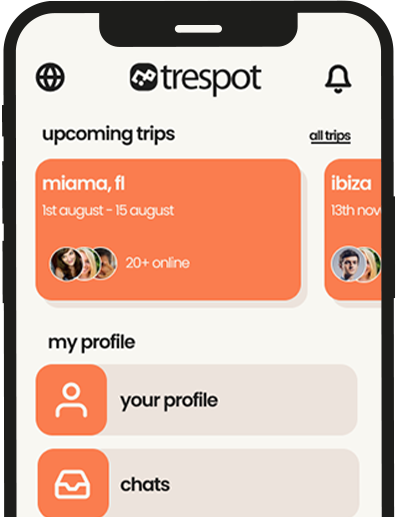
- Post the trip on Trespot: destination, dates, daily budget, vibe (“Vietnam three weeks, $35/day, food-obsessed, one party a week max”). The city chats and matching surface your people; the vetting ritual keeps it safe.
- Draft the route with the AI trip planner and share the PDF — a concrete plan converts “interested!” into booked flights faster than anything else.
- Run the playbook: deposit-style commitment, expense app, one veto each, slack built in — and when your crew shrinks or grows en route, the next city’s chat replenishes it.
- Steal the tour structure: one anchor activity a day, shared dinners, split afternoons. Operators charge four figures for that rhythm; it’s copyable for free.
For destination inspiration built for this exact life stage, start with fun vacation spots for young adults in the US and countries with the best nightlife.
Quick takeaways
- Three rails: party tours (18–35), long-weekend social trips (25–39), and the DIY crew at half the price.
- One filter beats all: ask what the evenings look like on your exact departure.
- Budget the “optionals” as mandatory and split costs in an app from purchase one.
- 12–18 people forms a crew; 40+ forms cliques. Free time is where the friendships happen.
- The operator’s real product is pre-assembled people — Trespot makes that part free.
Question & Answer
FAQs - Group Travel for Young Adults
1. What is the best group travel company for young adults?
It depends on energy: Contiki owns the 18–35 party-coach lane, FTLO Travel suits working 25–39s with limited PTO, and Intrepid and G Adventures run younger-range adventure trips with local transport and homestays. Ask what a typical evening looks like on your exact departure — that answer sorts the brands faster than any review.
2. How much does a young adults group trip cost?
Organized 1–2 week trips typically run low four figures plus flights, with dorm-based versions 30–40% cheaper than hotel-based. Budget the optional activities as mandatory and add leader tips. A self-assembled crew doing the same route on hostels and buses reliably lands at about half the organized price.
3. Is 30 too old for young adult group trips?
No — most 18–35 brands are thickest in the 24–31 range, and the 25–39 operators exist precisely for people who aged out of hostel-crawl energy but not out of group travel. If you're weighing it, our solo travel in your 30s guide covers the whole life stage.
4. How do I do group travel cheaply in my 20s?
Skip the operator: assemble two to four vetted travelers on Trespot, draft the route with the AI planner, sleep in hostels, move on buses, and split everything through an app. You trade the tour leader for freedom and roughly half the cost — and the skills you learn make every later trip cheaper too.
5. Do people make real friends on group trips?
Reliably — shared logistics compress friendship formation from months to days, and young-adult trips end with named group chats and reunion plans as a matter of routine. The friendships that survive the airport are half the product; see our essay on the power of making friends while traveling.
6. Group tour or backpacking solo first?
If the blank-map feeling intimidates you, one organized trip works as a paid apprenticeship: borders, budgets, and making friends from cold. If you're already comfortable, go straight to the DIY crew — solo with scaffolding teaches faster and costs less.
Assemble your crew
Post your route, budget, and vibe on Trespot — verified travelers your age are planning the same trip right now. Draft the plan with the AI planner, fill the crew, and go while the calendar still bends.
References
- Booking.com Future of Travel Survey, 2024 — social motivations of Gen Z and Millennial travelers.
- Contiki, FTLO Travel, Intrepid, G Adventures — age-range positioning and trip formats.
- Trespot community observations, 2025–2026 — DIY crew formation patterns.