
The short answer
The best digital nomad destinations for 2026 balance five things: cost of living, reliable fast internet, an existing nomad community, a workable visa, and quality of life. The current standouts — Lisbon (Europe’s nomad capital), Medellín and Mexico City (Latin America’s social hubs), Bangkok, Chiang Mai, and Bali’s Canggu (Asia’s value-and-scene leaders), plus rising stars like Da Nang, Tbilisi, and Buenos Aires — each win a different trade-off. The one factor first-timers underweight is community: a slightly pricier city with a thriving nomad scene beats a cheaper one where you’re alone. Pick for the people as much as the price.
What actually matters in a nomad base
- Cost of living — the classic draw, and still decisive: a great nomad city lets your remote income stretch into a lifestyle you couldn’t afford at home.
- Internet — non-negotiable: fast, reliable wifi and good mobile data, plus a fallback (coworking, a second SIM) for when the home connection dies.
- Community — the most underrated factor: an existing scene of nomads and remote workers means instant friends, coworking events, and Slack/WhatsApp channels. Solo in a cheap city gets lonely fast.
- Visa & legality — increasingly important: dozens of countries now offer dedicated nomad visas that let you stay legally for months or years (see below).
- Quality of life — weather, safety, food, healthcare, walkability, time-zone overlap with your clients, and the intangible “could I actually live here?” test.
Europe & the near-East
- Lisbon, Portugal — the reigning European nomad capital: huge community, great weather, walkable, English-friendly, Portugal’s nomad visa, and a scene so dense you’ll never be short of a coworking friend. Pricier than it was, still the default first choice. (See when to go and our Portugal guide.)
- Tbilisi, Georgia — the value star: extraordinarily cheap, a one-year visa-free stay for many nationalities, a growing scene, and wine country on the doorstep.
- Split & the Croatian coast — Croatia’s nomad visa plus Adriatic summers; seasonal but gorgeous.
- Madeira & the Canary Islands — Atlantic-island bases with dedicated nomad villages, mild year-round weather, and tight communities.
- Istanbul, Turkey — two continents, incredible food and value, and a rising scene (see our Turkey guide).
Latin America
- Medellín, Colombia — the eternal-spring social hub: superb weather, low cost, a massive nomad scene in Laureles and El Poblado, and a nomad visa. The most social city on this list. (See our Colombia guide.)
- Mexico City, Mexico — the culture-and-food heavyweight: Roma-Condesa is nomad central, the scene is huge and creative, and it’s in a US-friendly time zone. Rising cost, still excellent.
- Buenos Aires, Argentina — European elegance at Latin prices (currency swings make it a bargain), a vibrant scene, and legendary nightlife and steak.
- Playa del Carmen & Oaxaca, Mexico — the beach and the culture alternatives to CDMX, both with growing nomad communities.
- Florianópolis, Brazil — surf-and-tech island with Brazil’s nomad visa and a fast-growing scene.
Asia
- Bali (Canggu & Ubud), Indonesia — the original nomad mecca: unbeatable coworking-and-cafe density, surf, wellness, and the world’s biggest nomad community, now with Indonesia’s longer-stay visa options. Canggu for the scene, Ubud for the calm.
- Chiang Mai, Thailand — the value-and-focus classic: very cheap, excellent coworking, a long-established community, and fewer distractions than the islands. Thailand’s newer long-stay visas help. (See when to go.)
- Bangkok, Thailand — the big-city option: world-class food and transport, endless coworking, and a huge scene for those who want energy over serenity.
- Da Nang, Vietnam — the rising star: beach city, very low cost, fast-growing community, great food, and Vietnam’s improving visa situation. (See our Vietnam guide.)
- Penang & Kuala Lumpur, Malaysia — English-friendly, affordable, well-connected, with Malaysia’s DE Rantau nomad pass.
Nomad visas in 2026
The biggest shift in nomad life this decade is legitimacy: over 50 countries now offer dedicated digital nomad visas, letting you live and work remotely for anywhere from six months to several years — a world away from the old visa-run shuffle. The mechanics vary but the pattern is common: prove a minimum monthly income (often €2,000–3,500 or so), show remote employment or clients outside the country, carry health insurance, and pass a background check. Portugal, Spain, Croatia, Greece, Estonia, Colombia, Mexico, Brazil, Indonesia, Thailand, Malaysia, and Georgia (via long visa-free stays) all have workable options. Rules and income thresholds change frequently, so verify the current requirements on the official government source before you plan — not a blog (including this one). The right visa turns a base from a three-month sprint into a place you can actually settle.
How to choose your base
- Start with your constraints: time-zone overlap with clients, visa eligibility, and budget narrow the list fast — solve these first.
- Weight community heavily if you’re newer to nomad life — a city with a scene (Lisbon, Medellín, Canggu, Chiang Mai) makes the loneliness that ends most nomad experiments a non-issue.
- Match the vibe to your work: Chiang Mai and Ubud for focus, Bangkok and Mexico City for energy, beach cities for balance, Bali for the full lifestyle.
- Try before you commit: spend a month before signing a longer lease; cities feel different as a resident than a tourist.
- Consider the seasons: many nomads follow the weather — Europe in summer, Southeast Asia and Latin America in the northern winter.
Landing & finding your people
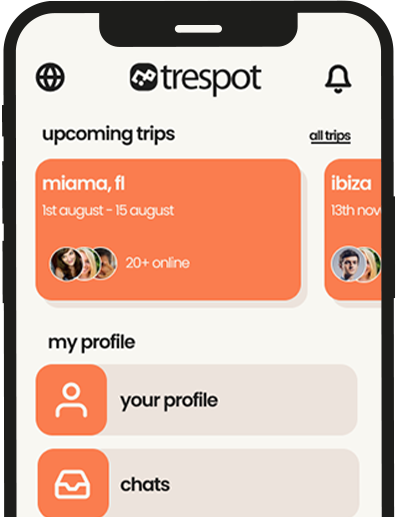
A base is only as good as the community you plug into — and the good news is that nomad-heavy cities make it easy, if you move fast in your first week. Book a coliving space or nomad-focused coworking for the first stretch; they concentrate exactly the people you want to meet and usually run events. Join the local nomad channels (every scene city has Slack, WhatsApp, and Facebook groups) the day you arrive. Go to the recurring things twice — the weekly meetup, the coworking social — because repetition is what turns nomads into friends (the full method is in how to make friends in a new city). And open the Trespot city chat to connect with other travelers and nomads on the ground for the first coffees, the apartment tips, and the weekend trips. Nomad loneliness is real and it’s the number-one reason people quit — but in the right city, with the right first-week moves, it’s entirely avoidable.
Quick takeaways
- The best nomad bases balance five factors: cost, internet, community, visa, and quality of life — not just cheap-plus-wifi.
- Current standouts: Lisbon (Europe), Medellín and Mexico City (LatAm), Bangkok, Chiang Mai and Bali (Asia), plus Da Nang, Tbilisi, Buenos Aires.
- Community is the most underrated factor — a pricier city with a scene beats a cheaper one where you’re alone.
- 50+ countries now offer nomad visas (typically €2,000–3,500/mo income) — always verify current rules on the official source.
- Land well: coliving/coworking + local nomad channels + recurring events + the city chat, all in week one.
Question & Answer
FAQs - The Best Digital Nomad Destinations for 2026
1. What are the best digital nomad destinations in 2026?
The standouts balance cost, internet, community, visa, and quality of life: Lisbon (Europe's nomad capital), Medellín and Mexico City (Latin America's social hubs), Bangkok, Chiang Mai, and Bali's Canggu (Asia's value-and-scene leaders), plus rising stars Da Nang, Tbilisi, and Buenos Aires. Each wins a different trade-off — pick for the community as much as the price.
2. What makes a good digital nomad city?
Five things: affordable cost of living that stretches your remote income, fast reliable internet with a fallback, an existing nomad community for instant friends and coworking, a workable visa (dozens of countries now offer nomad visas), and quality of life — weather, safety, food, and a favorable time-zone overlap with your clients. First-timers underweight community, which is what prevents the loneliness that ends most nomad stints.
3. Which countries have digital nomad visas?
Over 50 as of 2026, including Portugal, Spain, Croatia, Greece, Estonia, Colombia, Mexico, Brazil, Indonesia, Thailand, and Malaysia, with Georgia offering long visa-free stays. Most require proof of remote income (often €2,000–3,500 a month), health insurance, and a background check. Requirements change frequently, so always verify the current rules on the official government source before planning.
4. What is the cheapest digital nomad destination?
Among cities with real community and infrastructure, Tbilisi (Georgia), Chiang Mai (Thailand), Da Nang (Vietnam), and Medellín (Colombia) offer the best cost-to-quality ratio, where a comfortable lifestyle costs a fraction of Western prices. The very cheapest places often lack the community and internet that make nomad life work, so balance price against the other factors.
5. How do digital nomads make friends in a new city?
Move fast in week one: book a coliving space or nomad-focused coworking (they concentrate exactly the right people and run events), join the local nomad Slack, WhatsApp, and Facebook channels the day you arrive, go to recurring weekly meetups twice, and use city-chat apps like Trespot to connect with other nomads and travelers on the ground. Nomad-heavy cities make community easy if you plug in immediately.
6. Is digital nomad life lonely?
It can be — loneliness is the number-one reason people quit nomad life — but it's largely avoidable with the right choices. Pick a city with an existing community rather than the cheapest option, plug into coliving and coworking scenes immediately, and prioritize recurring social events over one-off activities. In a hub like Lisbon, Medellín, or Canggu, with good first-week moves, you'll have a circle within weeks.
Pick the base. Find the community.
Choose a nomad city with a scene, then open the Trespot city chat before you land to connect with the nomads and travelers already there — the first coffees, the apartment leads, the weekend trips. The right base plus the right people is the whole nomad dream.
References
- Nomad List and remote-work community data — city rankings and cost indices.
- Government immigration sources — nomad visa requirements (verify current rules).
- Coliving and coworking network directories — community infrastructure.