
The short answer
To meet people while traveling, stop waiting for it to happen and engineer it: stay in social accommodation, do one group activity a day, and say yes to invitations by default. Ninety percent of travel friendships form in three settings — where you sleep, structured activities, and shared transit — so put yourself in those settings and the rest takes care of itself. You don’t need to be outgoing; you need to be present and approachable. And a city chat opened before you arrive means you can have company on day one whenever you want it.
Why it’s easier than you think
Meeting people at home is hard because everyone already has their circle, their routine, and no particular reason to add you. Travel inverts all of that. On the road, everyone around you is also outside their normal life, most solo travelers are actively hoping to meet someone, and the shared situation — same hostel, same tour, same delayed bus — hands you an instant reason to talk. A solo traveler is the most approachable person in any room, because they’re not sealed inside a couple or a group. The result is a paradox first-timers rarely believe until they experience it: it’s often easier to make a friend in a foreign city than in your hometown. The demand is there; you just have to meet it halfway.
The three settings that do 90% of the work
- Where you sleep. Social accommodation is the single highest-leverage choice you make. A hostel with a common room and events, a social guesthouse, a coliving space — the building generates introductions while you do nothing. Book for “social” and “met” in the reviews. Private rooms exist in most social hostels if dorms aren’t for you; the common room is the real product.
- Structured activities. A walking tour, cooking class, dive course, group hike, or bar crawl removes the hardest part — the cold approach — because conversation is built into the format and everyone’s there to meet people too. One activity a day is the reliable rhythm.
- Shared transit. Overnight buses and trains, shared shuttles, group boat trips, ferry decks — travel’s enforced proximity is a friendship generator. The person beside you on the sleeper to Chiang Mai is a captive, willing conversation.
Notice what these have in common: you’re not approaching strangers, you’re sharing a situation. That reframe is the whole game.
12 tactics that work
- 1. Say yes by default. The single most important rule: when someone invites you to dinner, the waterfall, the bar — say yes unless you have a real reason not to. Most travel friendships trace back to one yes.
- 2. Book the day-one activity. A free walking tour on your first morning in a new city seeds the whole stay — and the post-tour “anyone for lunch?” is a classic.
- 3. Hang in the common room, not your room. Do your planning, journaling, and coffee where people are. Presence is 80% of it.
- 4. Ask for a small thing. “Is this seat taken?”, “Where’s good to eat near here?”, “Mind watching my bag?” — tiny asks open doors without pressure.
- 5. Cook or eat communally. Hostel kitchens and communal tables are conversation by design; offer to share, or ask what someone’s making.
- 6. Sit at the bar or counter. Solo diners at a counter get talked to; a table for one in the corner doesn’t. Choose the counter.
- 7. Take a class. Cooking, surfing, language, salsa — shared mild incompetence is the best icebreaker ever invented, with built-in second meetings.
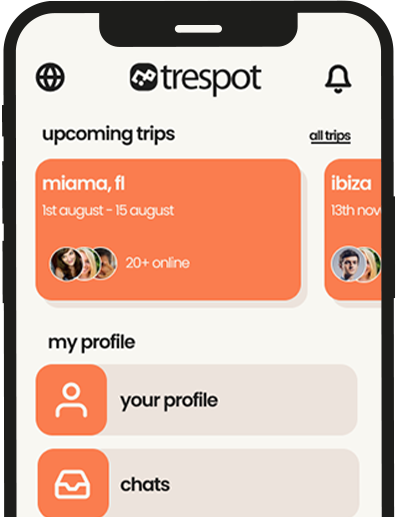
- 8. Use the city chat. Post one concrete plan on Trespot — “sunset viewpoint Thursday, anyone?” — and arrive somewhere with the evening already peopled.
- 9. Be the organizer. Nobody has to start the plan — so you start it. “I’m getting food at 7, come along” makes you the hub of the hostel by night two.
- 10. Carry a conversation object. A guitar, a deck of cards, a Polaroid, an interesting book — a prop gives shy people a reason to talk to you.
- 11. Learn a few local words. Effort with the language warms locals instantly and marks you as a traveler, not just a tourist.
- 12. Follow up before you sleep. Swap contacts or add each other the moment you click — the friendship you don’t exchange numbers with evaporates by morning.
For introverts & the shy
You do not have to become an extrovert, and pretending to be one is exhausting and counterproductive. Introverts often make better travel connections — deeper, one-on-one, less performative — because they listen and choose their moments. The introvert’s playbook: lean on structured settings (a class or tour does the socializing for you, no cold approach needed), prefer one-on-one over groups (find your one person and let the group be background), schedule recovery time openly (“I’m doing a solo morning, back for lunch” is a complete sentence), and use the city chat to arrange low-pressure daytime meetups on your terms rather than braving a loud dorm. One good conversation a day is plenty. You’re not failing at socializing by needing quiet — you’re doing it sustainably.
Travelers vs locals
Two different kinds of connection, both worth having. Fellow travelers are the easy, fast friendships — instant rapport (you’re living the same day), no language barrier, and often the people you’ll actually travel onward with. Hostels, tours, and the apps for meeting travelers deliver them. Locals take a little more intention but give you the deeper, more authentic experience — the hidden spots, the real food, the perspective no guidebook has. You reach them through language exchanges, home dining, hobby meetups, and community events — the full toolkit is in our guide to apps to meet locals. The richest trips mix both: a traveler crew for the adventures, a local or two for the soul of the place.
Turning hellos into real connections
Meeting people is the easy part; the skill worth developing is turning a pleasant hello into something that lasts beyond the hostel. Three moves: propose the concrete next thing (“let’s do the market tomorrow at 11” beats “we should hang out” every time), exchange contacts early (the moment you click, not at the awkward goodbye), and actually follow through when your paths cross again or they land in your city. The traveler you shared one dinner with in Oaxaca becomes the free couch in Berlin a decade later — but only if you kept the thread. That compounding is the real magic, and it’s the subject of our favorite essay, the power of making friends while traveling. Meet generously, follow up reliably, and a few years of travel builds a map of friends across the world.
Quick takeaways
- Meeting people while traveling is a learnable skill, not a personality — engineer the settings and say yes by default.
- 90% of travel friendships form in three settings: where you sleep, structured activities, and shared transit.
- The reframe that works: you’re not approaching strangers, you’re sharing a situation.
- Introverts don’t need to fake extroversion — lean on structured settings, one-on-one, and open recovery time.
- Mix travelers (fast, easy) and locals (deeper, authentic); then follow up — the compounding is the whole magic.
Question & Answer
FAQs - How to Meet People While Traveling
1. How do you meet people while traveling alone?
Engineer it rather than wait for it: stay in social accommodation (a hostel common room does the work while you sleep), do one group activity a day (tours, classes, day trips remove the cold approach), and say yes to invitations by default. Solo travelers are the most approachable people in any room, and most others are hoping to meet someone too.
2. Is it hard to make friends while traveling?
Usually far easier than at home — everyone's outside their normal life, most solo travelers actively want to meet people, and shared situations (same hostel, same tour, same bus) hand you an instant reason to talk. Many first-timers are surprised how much easier it is to make a friend in a foreign city than in their hometown.
3. How do introverts meet people while traveling?
Lean on structured settings where conversation is built in (a class or tour, no cold approach needed), prefer one-on-one over groups, schedule recovery time openly, and use city-chat apps to arrange low-pressure daytime meetups on your terms. One good conversation a day is plenty — introverts often make deeper travel connections precisely because they listen and choose their moments.
4. What's the best way to meet other travelers?
Social hostels are the single best engine — book for 'social' and 'met' in the reviews, hang in the common room, and say yes to the pub crawl or day trip. Group tours, dive courses, and shared transit also reliably deliver, and apps like Trespot connect you with verified travelers heading the same way before you even arrive.
5. How do I meet people if I'm shy or nervous?
Start with the lowest-pressure tactics: book a day-one walking tour (conversation is automatic), ask small favors ('is this seat taken?', 'where's good to eat?'), sit at bar counters rather than corner tables, and carry a conversation object like cards or a book. Structured activities do the socializing for you, so you never have to walk up to a stranger cold.
6. How do you keep travel friendships going?
Three moves: propose a concrete next plan instead of a vague 'let's hang out,' exchange contacts the moment you click rather than at the goodbye, and actually follow through when your paths cross or they visit your city. The dinner friend in one country becomes the free couch in another years later — but only if you kept the thread.
Never eat dinner alone (unless you want to)
Open your destination’s city chat on Trespot before you land, post one concrete plan, and meet verified travelers heading the same way. Meeting people on the road is a system, not luck — and it starts before your flight.
References
- Booking.com Future of Travel Survey, 2024 — social motivations of travelers.
- Solo travel community research — friendship-formation settings.
- Trespot community observations, 2025–2026 — city-chat meetup patterns.