
Unique travel destinations are the new currency of brag-worthy adventures. Google searches for “hidden gem” trips jumped 25 % in 2024, and platforms like Atlas Obscura saw record clicks on remote place pages [1][2]. This 2,000-word guide distills that momentum into an actionable playbook: defining what makes a place unique, spotlighting surreal landscapes and secret cities, detailing visas and sustainability hacks, and arming you with digital-safety tips. Whether you’re mapping a solo cool-cation or rallying a travel-meetup crew, bookmark this blueprint and start plotting dots most tourists haven’t even Googled yet.
1. The New Age of Unique Travel Destinations
The post-pandemic boom unleashed two parallel forces: revenge tourism, which pushed crowds back to Venice, and an experiential surge worth $1.6 trillion in 2024 [3]. Deloitte’s 2026 survey reveals 53 % of Americans plan more trips but with tighter daily budgets; offbeat regions solve that paradox by offering higher novelty at lower costs. Unique insight: Some hidden gems are hiding in plain sight—Vilnius, crowned Europe’s 2026 Green Capital, is just a €30 flight from London yet sees a fraction of Barcelona’s footfall.
2. Defining “Unique”: Five Criteria That Matter
- Geographic rarity—e.g., Bolivia’s moon-like salt flats.
- Cultural authenticity—living traditions like Mongolia’s eagle-hunters.
- Biodiversity or geology—endemic species on Socotra Island.
- Visitor impact & sustainability—Lord Howe caps tourists at 400.
- Story value—mysteries such as Ladakh’s Magnetic Hill.
3. Other-Worldly Landscapes
Salar de Uyuni, Bolivia
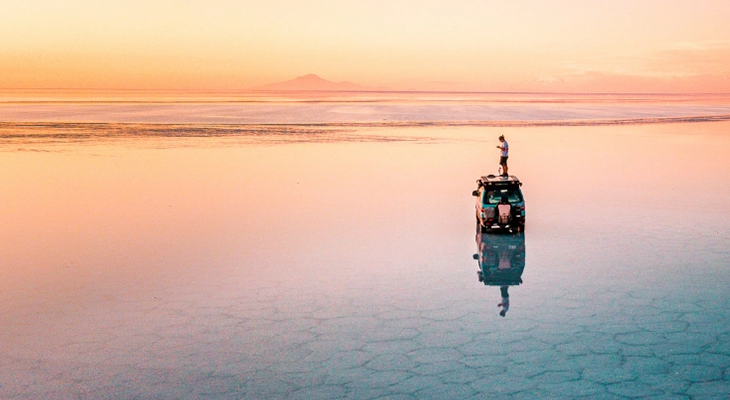
At 10 582 km², the planet’s largest salt flat morphs into a mirror after rains, perfect for infinity photos [4]. Stay in salt-brick lodges; visit March–April for reflections.
Spotted Lake, Canada
Summer evaporation reveals teal to chartreuse mineral pools considered sacred by the Okanagan First Nations [5]. View only from the roadside to respect the site.
Darvaza “Gates of Hell,” Turkmenistan
This 70 m-wide crater has burned since 1971 [6]. Camp in the desert for blue-hour flame photography. Pro-tip: bring a tripod; desert winds shake phone shots.
4. Secret Cities Steeped in Culture
Chefchaouen, Morocco
Indigo-washed lanes deterred mosquitoes historically but now thrill photographers [7]. Weaving classes with local co-ops fund literacy programs.
Gyeongju, South Korea
UNESCO tomb mounds and lantern temples sit two hours from Seoul via new KTX fast rail, ideal for cultural immersion tours.
Kotor, Montenegro
Climb fortress walls at dawn, then kayak the bay’s church-capped islands. Cruise crowds thin after 4 pm, giving solo travelers the stone alleys to themselves.
5. Islands Time Forgot
Socotra, Yemen
Home to dragon-blood trees and 700+ endemic species [8]. Charter flights run October–April from Abu Dhabi.
Lord Howe Island, Australia
UNESCO-listed paradise limits visitors to 400; snorkel pristine reefs at 31° S latitude.
Svalbard, Norway
Arctic “cool-cation” hotspot with 24-hour daylight in summer. Polar-bear safety briefings are mandatory before hiking.
6. Frontier Adventures for Thrill-Seekers
Pamir Highway (Tajikistan/Kyrgyzstan)
At over 4 000 m, the world’s second-highest international road spans 1 200 km. Homestays under $20 foster instant travel-meetup camaraderie [9].
Volcano Boarding, Nicaragua
Cerro Negro lets daredevils reach 95 km/h on plywood sleds [10]. Pair thrills with León’s colonial street art.
Pack-Rafting in Greenland’s Fjords
Tiny inflatable boats access meltwater lakes unseen a decade ago. Outfitters cap groups at six to protect fragile tundra.
7. Planning & Logistics: How to Reach the Unreachable
- Visas: Turkmenistan requires an LOI; Socotra needs a separate Yemeni visa.
- Seasonal windows: Svalbard shoulder seasons (May & Sept) cut costs.
- Multi-modal hacks: Night trains replace one hotel night and slash your carbon footprint.
- Budget insight: Uyuni tours cost under $200 for three days—half a day at Iceland’s ice caves.
8. Traveling Responsibly in Fragile Places
Adopt capped-visitor destinations, hire local guides, track emissions with apps like Joro, and follow Leave-No-Trace. Studies show 97 % of Indian travelers aim to travel sustainably in 2026 [11].
9. Digital Networking & Safety on the Road Less Traveled
- Travel networking apps—Trespot or Backpackr match itineraries for cost-sharing.
- Emergency tech: Garmin inReach Mini 2 offers SOS outside cell range.
- eSIMs: Airalo covers 190+ countries; always pair with a VPN.
Conclusion
As tourism speeds past pre-pandemic highs, unique travel destinations are no longer fringe—they’re lifelines for explorers craving authenticity and meaning. By using the five-point uniqueness filter, planning around climate windows, and embracing responsible tech-savvy practices, you’ll trade selfie hordes for salt mirrors, blue alleys, and dragon-blood forests—often at a fraction of big-city prices. Ready to tread lightly, amplify local voices, and stamp your passport with stories no algorithm could predict? The world’s rare corners are calling—answer wisely.
Frequently Asked Questions
What’s the most accessible unique destination for first-timers?
Chefchaouen, Morocco: easy buses from Tangier, budget riads, and low visa hurdles.
How can I meet travel buddies for remote trips?
Use apps like Trespot, or niche Facebook groups such as “Offbeat Backpackers.”
Are hidden gems always pricey?
No. A three-day Uyuni tour costs under $200—cheaper than one day at Iceland’s Blue Lagoon.
Essential gear for frontier adventures?
Satellite communicator, layered merino wear, universal eSIM, and portable water filter.
How do I ensure local communities benefit?
Book family-run stays, tip guides directly, and buy crafts from certified co-ops.
References
- itsadrama.com, “17 Unique Travel Destinations”
- Rough Guides, “20 Seriously Weird Places Around the World”
- Bucketlistly Blog, “Best Off-the-Beaten-Path Countries”
- TravelTriangle, “59 Weirdest Places Across the World”
- Laure Wanders, “33 Amazing Off the Beaten Path Destinations”
- Atlas Obscura, site pages on hidden destinations
- unusualplaces.org, “Unique Travel Destinations”
- SOTC, “7 Mysterious Places in the World”
- Forbes, “8 Travel Trends Driving Luxury Travel in 2026”
- The Hindu Business Line, “Searches for Off-the-Beaten-Path Destinations Go Up by 25%”